A possible shakeup in the US small bank landscape?
See attached research note, US Commercial Property Accidents Ahead, written by my colleague, Philip Suttle (brief bio below):
Institute of International Finance, Chief Economist
Barclays Investment Bank, Global Head of Emerging Market Research
Federal Reserve Bank of New York
The World Bank, Director, Development Finance Group
JP Morgan, Economist
Bank of England, Economist
Brief snapshot of research:
- Many small US banks are heavily exposed to commercial real estate, often in a geographically-concentrated fashion.
- The CRE sectors most vulnerable to the C-19 downturn are likely to vary over time. Hotels and leisure developments have been most immediately affected and credit problems there could develop quite quickly. The retail sector was already under pressure from industry shifts underway before the crisis, and these trends have accelerated post-crisis. In the longer-term, however, the two largest sectors of the CRE market—apartments and office developments—could come under pressure. The last time this occurred was in the late 1980s, when the interaction of poor policies and excess market leverage combined to produce a serious crisis among smaller depository institutions.
- Banks hold about 39% of commercial mortgage debt, according to the Mortgage Bankers’ Association. The role of banks in the commercial property lending process is even more significant than these data suggest.
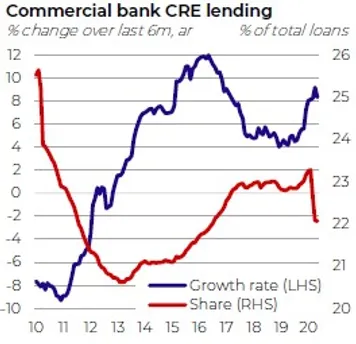
- CRE lending rose to 23.3% of bank loans in February. The decline in the share since reflects the surge in other bank lending, especially loans to commercial and industrial (C&I) companies. It is quite likely, in my view, that mounting CRE defaults could lead a renewed wave of small bank failures and renewed concentration.